

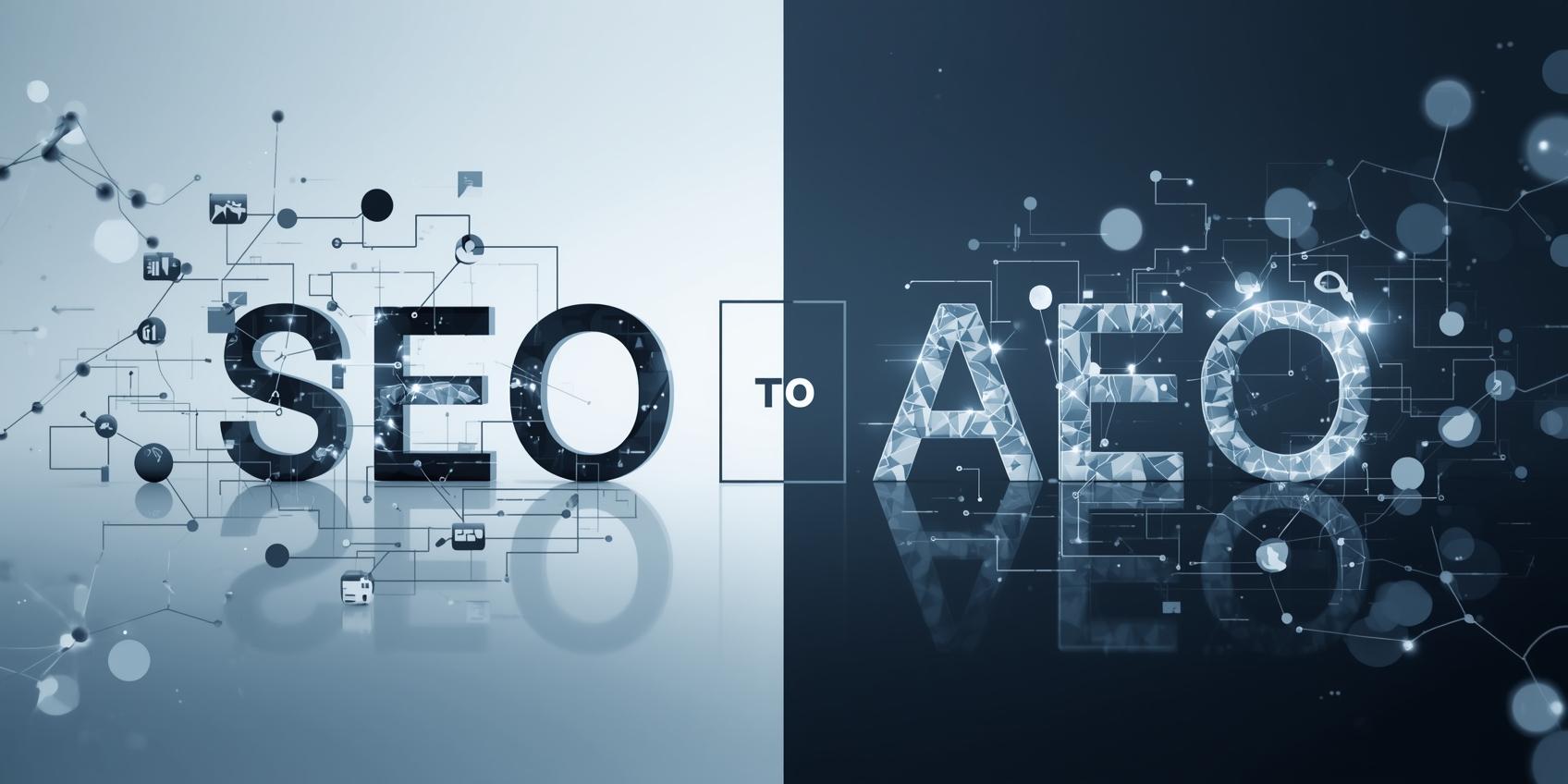
Picture this: A customer in the Niagara Region pulls out their phone and asks, “Hey Google, what’s the best Italian restaurant open now near me?” Within seconds, they get a perfect answer—complete with directions, hours, and reviews. But here’s the key: Google didn’t randomly choose that restaurant. The business that got recommended had optimized their content using Answer Engine Optimization (AEO) for Niagara, ensuring local customers find them quickly.
If you're still focusing only on traditional SEO, you're missing out on a massive opportunity. While SEO helps your website rank higher in search results, AEO ensures your business becomes the answer to customer questions—especially crucial for local businesses competing in the "near me" economy.
What Exactly Is Answer Engine Optimization (AEO)?
Answer Engine Optimization is the practice of structuring your content so AI-powered search engines, voice assistants, and chatbots can easily extract and present your information as direct answers to user queries. Unlike traditional SEO that focuses on getting people to click through to your website, AEO aims to have your business information appear right in the answer—whether that’s in a featured snippet, voice search response, or AI overview.
Think of it this way: SEO is like putting up a billboard on the highway hoping people will take the exit to visit your store. AEO is like having a helpful local guide who personally recommends your business when someone asks for directions.
Why Does Answer Engine Optimization (AEO) Matter More Than Ever for Niagara Businesses?

The search landscape has fundamentally shifted. Here’s what’s happening:
Voice Search Is Exploding: Nearly 58% of consumers use voice search to find local business information. When someone asks their smart speaker for recommendations, they typically get just one answer—not a list of ten blue links.
AI Overviews Are Taking Over: Google’s AI-powered summaries now appear on nearly 1 in 5 searches. These overviews pull information from multiple sources to create comprehensive answers, making it crucial that your content is citation-worthy.
Zero-Click Searches Are the New Normal: More people are getting their answers directly from search results without ever visiting a website. For local businesses, this means your information needs to be immediately visible and actionable.
How Does Answer Engine Optimization (AEO) Differ from Traditional SEO?
| Aspect | Traditional SEO | Answer Engine Optimization (AEO) |
|---|---|---|
| Primary Goal | Rank higher in search results | Become the direct answer |
| Success Metric | Website traffic and clicks | Citations and answer visibility |
| Content Focus | Keyword-optimized web pages | Concise, question-based answers |
| User Journey | Click through to website | Get instant answers |
| Optimization Target | Search engine algorithms | AI systems and voice assistants |
The key difference? SEO drives traffic to your website, while AEO makes your business the authoritative answer to customer questions.
How Do Small Businesses in Niagara Gain an Unfair Advantage with Local AEO?
Here’s some great news: local businesses actually have a significant advantage in AEO. Unlike national brands competing for broad keywords, you’re optimizing for specific, location-based questions that have much less competition.
Consider these common local search queries:
- “What’s the best coffee shop in downtown Portland?”
- “Is there a 24-hour pharmacy near me?”
- “Which dental clinic accepts walk-ins in Austin?”
When you optimize for these specific questions, you’re competing against maybe a dozen local businesses—not millions of websites globally.
What Are the Essential AEO Strategies for Local Businesses in 2026?

Essential AEO Strategies for Local Businesses
Here’s some great news: local businesses actually have a significant advantage in AEO. Unlike national brands competing for broad keywords, you’re optimizing for specific, location-based questions that have much less competition.
Consider these common local search queries:
- “What’s the best coffee shop in downtown Portland?”
- “Is there a 24-hour pharmacy near me?”
- “Which dental clinic accepts walk-ins in Austin?”
When you optimize for these specific questions, you’re competing against maybe a dozen local businesses—not millions of websites globally.
Check Social Media: Monitor local Facebook groups, Nextdoor, and other community platforms where people ask for business recommendations

Create Question-Focused Content That Answers Directly
Traditional SEO content might start with background information, but AEO content leads with the answer. Here’s the difference:
Traditional SEO Approach:
“Welcome to ABC Dental! Founded in 1985, we’ve been serving the Austin community for over 30 years. Our state-of-the-art facility offers comprehensive dental services…”
AEO Approach:
“Yes, ABC Dental accepts walk-in patients Monday through Friday from 8 AM to 6 PM. No appointment needed for urgent dental issues like tooth pain or broken teeth. Located at 123 Main Street, Austin, TX.”
Structure Your Answers Using the AIDA Framework:
- Answer the question immediately
- Information that adds helpful context
- Details for those who want more
- Action they can take next

Optimize Your Google Business Profile for Voice Search
Your Google Business Profile is crucial for local AEO success. Here’s how to optimize it:
Complete Every Section: Fill out business hours, services, products, attributes, and descriptions. Google uses this information to answer voice queries.
Use Natural, Conversational Language: Instead of “dental services,” write “teeth cleaning, root canals, and emergency dental care”.
Add Frequently Asked Questions: Use the Q&A feature to address common customer questions directly.
Maintain NAP Consistency: Ensure your Name, Address, and Phone number are identical across all online platforms.
Encourage and Respond to Reviews: Reviews help establish trust and authority, key factors for AI citations.

Build a Strategic FAQ Section
A well-optimized FAQ page is an AEO goldmine for local businesses. Here’s how to create one that works:
Group Questions by Category: Organize questions into logical sections like “Hours & Location,” “Services,” “Pricing,” and “Policies”.
Use Actual Customer Language: Frame questions exactly as customers ask them, not how you might phrase them internally.
Provide Complete, Concise Answers: Answer each question fully but briefly. Aim for 2-3 sentences that could stand alone if read by a voice assistant.
Include Local Keywords Naturally: Work location-based terms into your answers where they fit naturally.
Example FAQ Structure:
"Are you open on Sundays?
Yes! We’re open Sundays from 12 PM to 8 PM. Visit us at 4500 Lundy Lane, Niagara Falls—walk-ins are always welcome, no appointment needed.
Focus on Long-Tail, Conversational Keywords
Voice searches are typically longer and more conversational than typed searches. Instead of optimizing for “pizza delivery,” focus on phrases like:
- “Where can I get pizza delivered in 30 minutes?”
- “What pizza places deliver to downtown Seattle after 10 PM?”
- “Which pizza restaurant has the best gluten-free options near me?”
Use tools like AnswerThePublic, Google's autocomplete, and local keyword research to identify these conversational phrases.

Optimize for Featured Snippets
Featured snippets are prime real estate for AEO. To increase your chances of appearing in position zero:
Use Clear Headings: Structure your content with descriptive H2 and H3 tags that match common questions.
Create List and Table Formats: Google often pulls featured snippets from bulleted lists, numbered steps, and comparison tables.
Keep Answers Concise: Aim for 40-60 words for paragraph snippets, as this is Google's preferred length.
How Do You Track and Measure Your Brand's Answer Engine Optimization Success?
Unlike traditional SEO metrics, AEO success isn’t just about rankings and traffic. Here’s what to track:
Voice Search Visibility: Monitor how often your business appears in voice search results for key queries.
Featured Snippet Appearances: Track when your content appears in position zero.
Citation Frequency: Monitor how often AI systems and answer engines cite your content.
Local Pack Appearances: Watch your visibility in Google’s local 3-pack results.
Direct Answer Queries: Track searches where your information appears directly in the search results without requiring a click.

What Are the Most Common AEO and Local SEO Mistakes Businesses Make?
Mistake 1: Treating AEO as Separate from SEO: AEO and SEO work together. Strong SEO foundations help AI systems find and trust your content.
Mistake 2: Focusing Only on Keywords: AEO is about answering questions, not just including keywords.
Mistake 3: Ignoring Conversational Tone: Writing like a robot won’t help when people are asking questions in natural language.
Mistake 4: Neglecting Local Intent: Not all questions have local intent, but for local businesses, most of your AEO opportunities will.
Mistake 5: Inconsistent Information: Having different hours, phone numbers, or addresses across platforms confuses AI systems.
Why Is Answer Engine Optimization No Longer Optional for Modern Local Search?

The trend toward AI-powered search isn’t slowing down—it’s accelerating. As more people rely on voice assistants, chatbots, and AI overviews for local information, businesses that haven’t embraced AEO will become increasingly invisible.
But here’s the opportunity: most local businesses haven’t fully embraced AEO yet. By starting now, you can establish yourself as the authoritative answer in your market before your competitors catch on.
What Is the Action Plan for Implementing AEO on Your Local Business Website Today?
Ready to transform your local business’s online presence? Here’s your step-by-step action plan:
Week 1: Research and Planning
- Collect customer questions from your team and support channels
- Research “People Also Ask” questions for your industry
- Audit your current Google Business Profile completeness
Week 2: Content Creation
- Create or update your FAQ page with customer-focused questions
- Write question-focused blog posts addressing common queries
- Ensure all content provides direct, actionable answers
Week 3: Technical Implementation
- Add local business and FAQ schema markup to your website
- Optimize your Google Business Profile completely
- Ensure NAP consistency across all platforms
Week 4: Optimization and Monitoring
- Submit updated content to search engines
- Set up tracking for featured snippets and local pack appearances
- Begin monitoring voice search visibility
Ready to Dominate Local Search?
The shift from traditional SEO to Answer Engine Optimization represents the biggest change in local search since Google Maps was introduced. Businesses that embrace this change now will have a significant competitive advantage as AI-powered search becomes the norm.
Don’t wait for your competitors to figure this out. Start implementing these AEO strategies today, and watch your local business become the go-to answer for customers in your area.
For expert guidance on implementing AEO strategies and comprehensive digital marketing solutions that drive real results, visit Anterpreneur. If you’re specifically in the Niagara region, check out our specialized Niagara marketing services to see how we’re helping local businesses dominate their markets through cutting-edge AEO and digital marketing strategies.
What Are the Most Frequently Asked Questions About This Topic?
What's the difference between SEO and AEO for local businesses?
SEO focuses on ranking higher in search results to drive website traffic, while AEO aims to have your business information appear directly as the answer to customer questions. For local businesses, AEO is particularly valuable because it helps you become the immediate response to “near me” searches and voice queries without requiring users to click through multiple websites.
How long does it take to see results from AEO optimization?
AEO results can appear faster than traditional SEO, sometimes within 2-4 weeks for voice search and featured snippets. However, building comprehensive authority for consistent answer citations typically takes 3-6 months of consistent optimization efforts.
Do I still need traditional SEO if I'm focusing on AEO?
Yes, absolutely. AEO and SEO work together—strong SEO foundations help AI systems find and trust your content. Think of SEO as building your website’s authority, while AEO structures that authority to be easily extractable by answer engines.
What tools can help with AEO implementation?
Key tools include Google’s “People Also Ask” for question research, AnswerThePublic for conversational queries, Schema.org for structured data markup, Google Business Profile for local optimization, and tools like Screaming Frog for technical implementation tracking.
How do I track AEO success for my local business?
Monitor featured snippet appearances, voice search visibility, local pack rankings, citation frequency in AI overviews, and direct answer appearances in search results. Unlike traditional SEO metrics focused on clicks, AEO success is measured by answer visibility and authority citations.
Is AEO more important for certain types of local businesses?
: AEO is particularly valuable for service-based businesses (restaurants, healthcare, automotive, home services) and businesses that frequently answer customer questions. Any local business that customers typically research before visiting can benefit significantly from AEO strategies.
What's the most important first step for local AEO?
Start by collecting the actual questions your customers ask your staff, then create an FAQ page that answers these questions directly and concisely. This foundation provides immediate AEO value while you build more comprehensive strategies.